Literacy as a Human Right: Protecting Access, Expanding Opportunity, and Changing Life Trajectories
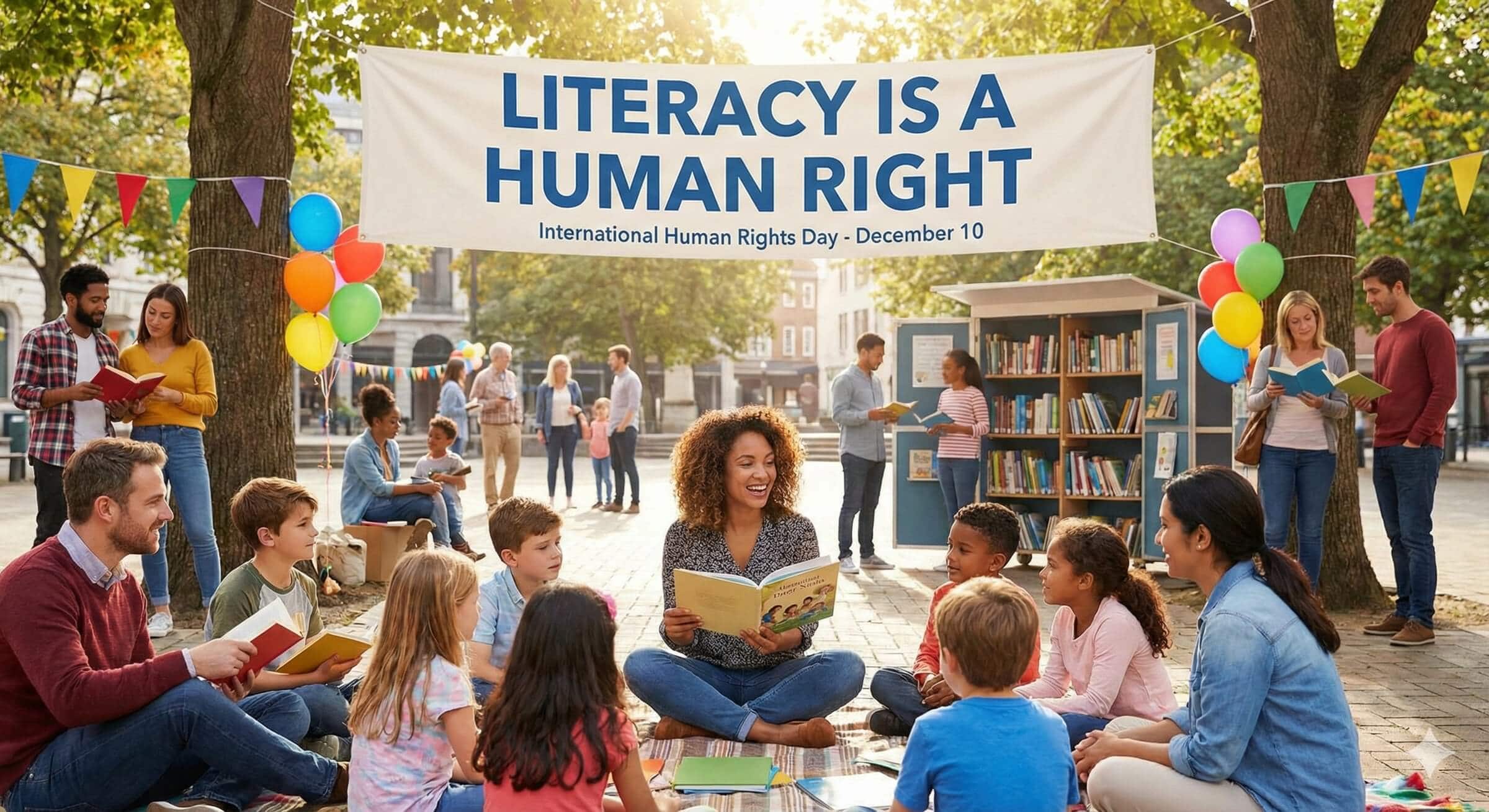
On International Human Rights Day, we reflect a simple truth: literacy is not just an academic skill—it is a human right that shapes the course of a child’s entire life. At the Rose Institute for Learning and Literacy, we believe every learner deserves access to strong, evidence-based reading instruction that allows them not only to succeed in school but to thrive far beyond it.
At the Rose Institute, we see daily how the ability to read shapes not only academic success but the entire trajectory of a child’s life. And while the Universal Declaration of Human Rights affirms education as a fundamental right, that right remains incomplete when children do not receive the evidence-based instruction required to become confident, capable readers.
Literacy Is More Than a Skill — It’s a Foundation for Life
Education and human-rights organizations, as well as emerging research, show literacy yields empowerment, participation, and opportunity. But beyond that: when students lack adequate reading instruction or resources, their futures are often shaped by systemic inequities—affecting economic mobility, social inclusion, and entire life trajectories.
Why Protecting Literacy Matters
When instruction is weak or inconsistent, literacy gaps widen—and the consequences are long-term. Recent research gives powerful evidence:
In a 2025 review titled Fostering Equitable Disciplinary Literacy Practices, researchers argue that disciplinary-literacy instruction in secondary schools must be equitable and accessible—otherwise many students are denied “disciplinary knowledge” and the power to interrogate and shape the knowledge that defines their world.
A 2022 neuro-educational neuroscience study, Socioeconomic Status and Reading Outcomes: Neurobiological and Behavioral Correlates, shows how low socioeconomic status (SES)—often intertwined with poverty and inequity—can negatively affect reading outcomes. The authors discuss how resource scarcity, reduced exposure, and stress-related factors influence brain systems supporting reading, thus making literacy deeply tied to social justice.
A 2023 linked-data study, Numeracy and Literacy Attainment of Children Exposed to Maternal Incarceration and Other Adversities, found that children exposed to maternal incarceration (alone or with additional adversities) had significantly higher odds of below-average reading and numeracy attainment across multiple grade levels compared to peers without these exposures. This shows how structural injustices—like parental incarceration—intersect with educational opportunity.
A large-scale 2022 study following 5 million U.S. students in grades 3–8, Reading Achievement Declines During the COVID-19 Pandemic, documented reading score drops of 0.09 to 0.17 standard deviations (compared to pre-pandemic peers), with the largest declines among students in high-poverty schools and among students of color—demonstrating how crises exacerbate inequities.
These findings illustrate that literacy is not a “nice to have”—it’s a human-rights and equity issue. When communities don’t protect literacy, we risk locking children out of opportunity.
The Role of Evidence-Based Reading Instruction
Research shows that nearly all children can learn to read when given instruction aligned with how the brain learns: systematic, explicit, cumulative, phonics-based, and supported by progress monitoring. Gaps in early resources, quality instruction, or support create disadvantages that amplify over time—especially for children from lower-SES households, multilingual backgrounds, or under-resourced communities. The intersections between neurobiology, social environment, and instruction demand we treat literacy as a matter of justice. (Romeo et al., 2022)
Why Literacy Is a Human-Rights Issue
When literacy becomes a barrier, it's no longer just an educational issue—it’s a matter of life trajectory. Literacy enables children to:
Participate fully in school and beyond
Access advanced education and employment
Understand and exercise their rights
Contribute civically and socially
Break cycles tied to poverty or social disadvantage
Research shows that children exposed to systemic disadvantages—poverty, family incarceration, socioeconomic instability—are more likely to suffer persistent reading gaps and lower educational attainment (Bell et al., 2023).
Denying equitable, evidence-based literacy instruction is denying a generation fundamental human rights: dignity, opportunity, and the chance to shape their own futures.
What a Human-Rights–Centered Literacy System Looks Like
Access for every child — Strong, evidence-based reading instruction from the start, regardless of zip code or background.
Early, accurate screening and support — Identifying and supporting emerging readers before gaps grow.
High-quality teacher preparation & resources — Teachers equipped with knowledge, tools, and ongoing professional development.
Support for every learner — Recognizing that learners come with different backgrounds, languages, and experiences, and providing the resources to meet their needs.
Community, family, and systemic investment — Partnering beyond schools alone; making literacy a shared responsibility and a public good.
Literacy Is a Human Right — And a Pathway Forward
On this #HumanRightsDay, we reaffirm our commitment: every child deserves not just the right to read—but the opportunity to read well. When literacy is protected and nurtured, children don’t just pass tests—they gain access to futures filled with dignity, opportunity, and hope.
At the Rose Institute for Learning and Literacy, we believe in that future. We work for that future. And we invite you to join us.
What does a truly equitable literacy system look like to you?
#RightToRead #EquityInEducation #ScienceOfReading #HumanRights #SchoolOfEducation #TheRoseInstituteForLearningAndLiteracy
About the Rose Institute for Learning and Literacy
The Rose Institute for Learning and Literacy was founded at Manhattanville in 2013 when Sandra Priest Rose established an endowment to ensure that as many students as possible have teachers who are trained in the most effective research-backed literacy instructional methods. The Rose Institute offers graduate coursework and advanced certificates through Manhattanville and professional development opportunities both in-district and through several partner BOCES.
Manhattanville University School of Education
The School of Education undergraduate and graduate degree programs prepare PreK-12 teachers and administrators, higher education and community leaders, and educational industry entrepreneurs. Having served the tri-state area for over five decades, the Manhattanville School of Education guides new generations of educators to become leaders in their field through unrivaled community-based field experiences in over 25 area schools and educational agencies.
Our graduate and doctoral programs offer a blended learning experience with online, in-person, and hybrid courses, which provide our students with the flexibility and resources they need to fulfill their educational goals.