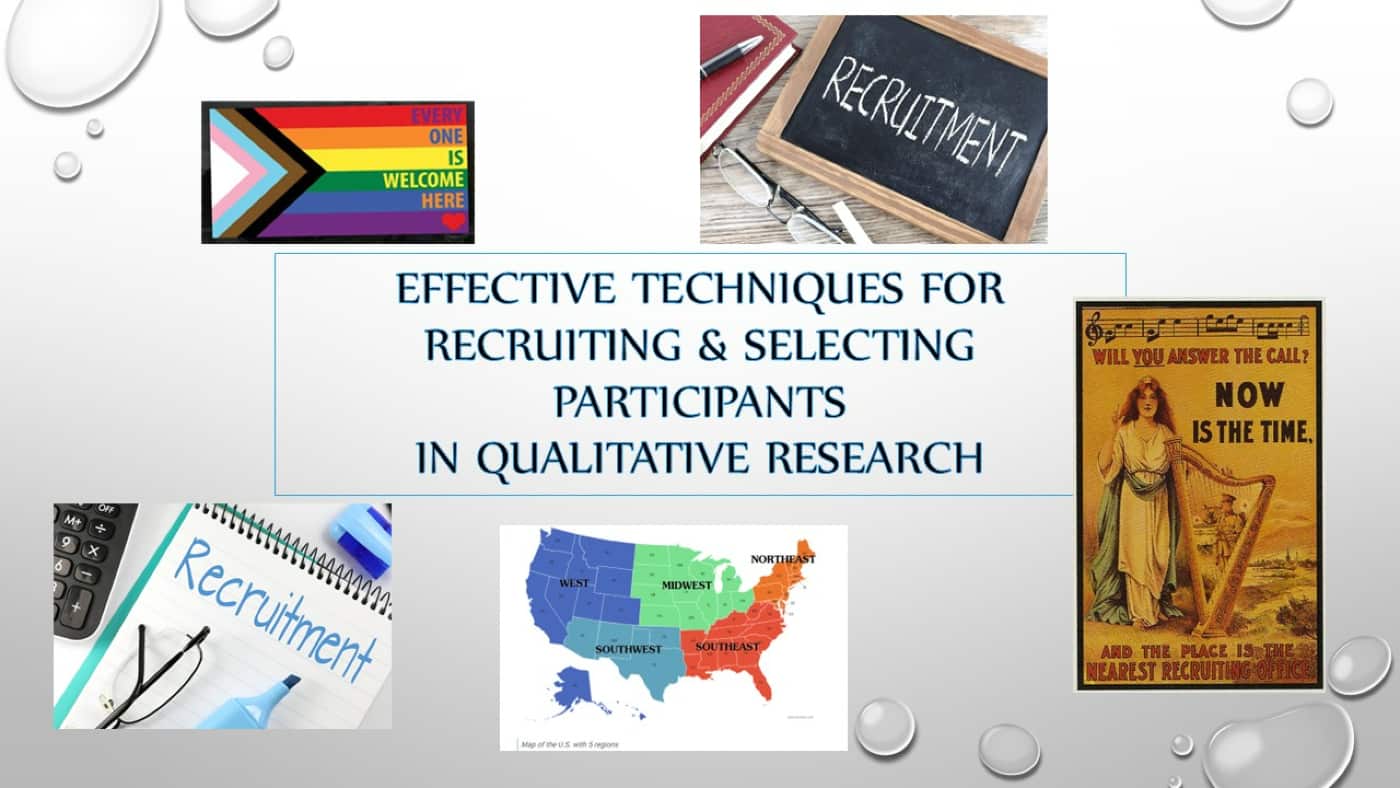
Recruiting participants is often one of the most stressful—and least talked about—parts of conducting qualitative research. Many doctoral students spend months carefully developing their research questions, securing Institutional Review Board (IRB) approval, and preparing interview protocols, only to discover that finding participants can be far more difficult than anticipated.
As part of my individual capstone project, I interviewed eight doctoral researchers who successfully completed qualitative/quantitative dissertations across a variety of educational topics. Although each study focused on a different population, one common thread emerged: participant recruitment was rarely straightforward. From busy educators and school leaders to highly specialized populations, each researcher faced unique obstacles that required persistence, creativity, and flexibility.
Despite these challenges, several common strategies consistently emerged. Below are the ten most effective recruitment strategies shared by these experienced researchers.
1. Build Relationships Before You Need Them
The most common recommendation was simple: relationships matter.
Researchers who had established professional networks or trusted relationships found it much easier to recruit participants. Many participants agreed to interviews because they already knew the researcher or because someone they trusted recommended participation.
Trust often proved to be more valuable than incentives.
2. Cast a Wide Net
Several researchers admitted that they initially limited their recruitment efforts too narrowly.
Successful recruitment often required expanding beyond a single district, state, or organization. Broadening geographic boundaries and using multiple recruitment channels significantly increased participation opportunities.
3. Don't Be Afraid to Follow Up
One email is rarely enough.
Researchers consistently emphasized that polite, respectful follow-up emails dramatically improved response rates. Persistence—not pressure—was key.
As one researcher explained, recruitment requires patience and consistency.
4. Be Flexible With Participants' Schedules
Researchers quickly learned that participants were far more likely to participate when interviews were scheduled around their availability rather than the researcher's.
Early mornings, evenings, lunch breaks, and virtual interviews often made participation much easier for busy professionals.
5. Use Multiple Recruitment Methods
No single recruitment strategy worked for everyone.
Researchers used combinations of:
- Professional organizations
- LinkedIn
- Facebook groups
- Colleague referrals
- Email invitations
- Recruitment flyers
Interestingly, several researchers found Facebook groups produced stronger recruitment results than LinkedIn.
6. Make Confidentiality Clear
Many participants hesitated because they feared their responses could somehow be traced back to them.
Researchers found that clearly explaining confidentiality procedures, pseudonyms, informed consent, and data protection helped participants feel more comfortable sharing honest experiences.
7. Timing Matters More Than You Think
Recruitment success often depended on when invitations were sent.
Researchers recommended avoiding particularly busy periods, including:
- Beginning of the school year
- Testing season
- Report card periods
- Election seasons for politically sensitive topics
Instead, quieter periods often resulted in stronger participation.
8. Be Willing to Pivot
Several researchers ultimately modified their recruitment plans.
Some expanded nationally. Others adjusted recruitment locations or broadened their participant pool.
Rather than viewing these changes as setbacks, researchers described them as necessary adaptations that strengthened their studies.
9. Let Your Network Work for You
One of the most valuable recruitment tools wasn't technology—it was people.
Researchers encouraged colleagues, dissertation committee members, administrators, and even former participants to share recruitment materials with others who met the study criteria.
These referrals often led to the highest-quality participants.
10. Explain Why Their Voice Matters
Perhaps the most meaningful finding from these interviews was that participants wanted to know their experiences would make a difference.
Researchers found that people were more willing to participate when they understood how their perspectives could contribute to future research, inform practice, or improve educational policy.
Purpose, more than compensation, motivated participation.
Final Thoughts
Participant recruitment is rarely as simple as sending a recruitment email or posting a flyer online. The researchers I interviewed consistently described recruitment as an ongoing process of building relationships, remaining flexible, communicating transparently, and adapting when initial plans did not work.
While every research study presents unique challenges, one lesson stood out above all others: successful recruitment is built on trust. Whether through professional networks, personalized communication, or ethical research practices, participants are far more likely to contribute when they feel respected, valued, and confident that their voices matter.
For future doctoral students and qualitative researchers, these lessons provide a practical roadmap for navigating one of the most challenging aspects of the research process. With persistence, flexibility, and a willingness to adapt, recruiting participants can become less overwhelming and far more successful.
Conducting these interviews reminded me that recruitment is about much more than reaching a target number of participants. It is about building trust, respecting people's time, and creating opportunities for individuals to share experiences that can ultimately strengthen research and improve practice. My hope is that these lessons help future researchers approach participant recruitment with greater confidence, persistence, and empathy.
 Blog written by Manhattanville University doctoral student
 Victoria DeLucia
Take Your Career to the Next Level
Elevate your leadership skills, deepen your understanding of critical and contemporary education issues, and learn to help solve the current challenges in P-20 education.
Learn to Inspire Change
The Doctoral Program in Educational Leadership from Manhattanville, offered in partnership with Putnam Northern Westchester BOCES, utilizes a forward-thinking approach to educational leadership that is ideal for practicing and aspiring leaders in any educational context. It is designed to support the goals of educational professionals who seek to develop their leadership skills for career advancement or current job enhancement.