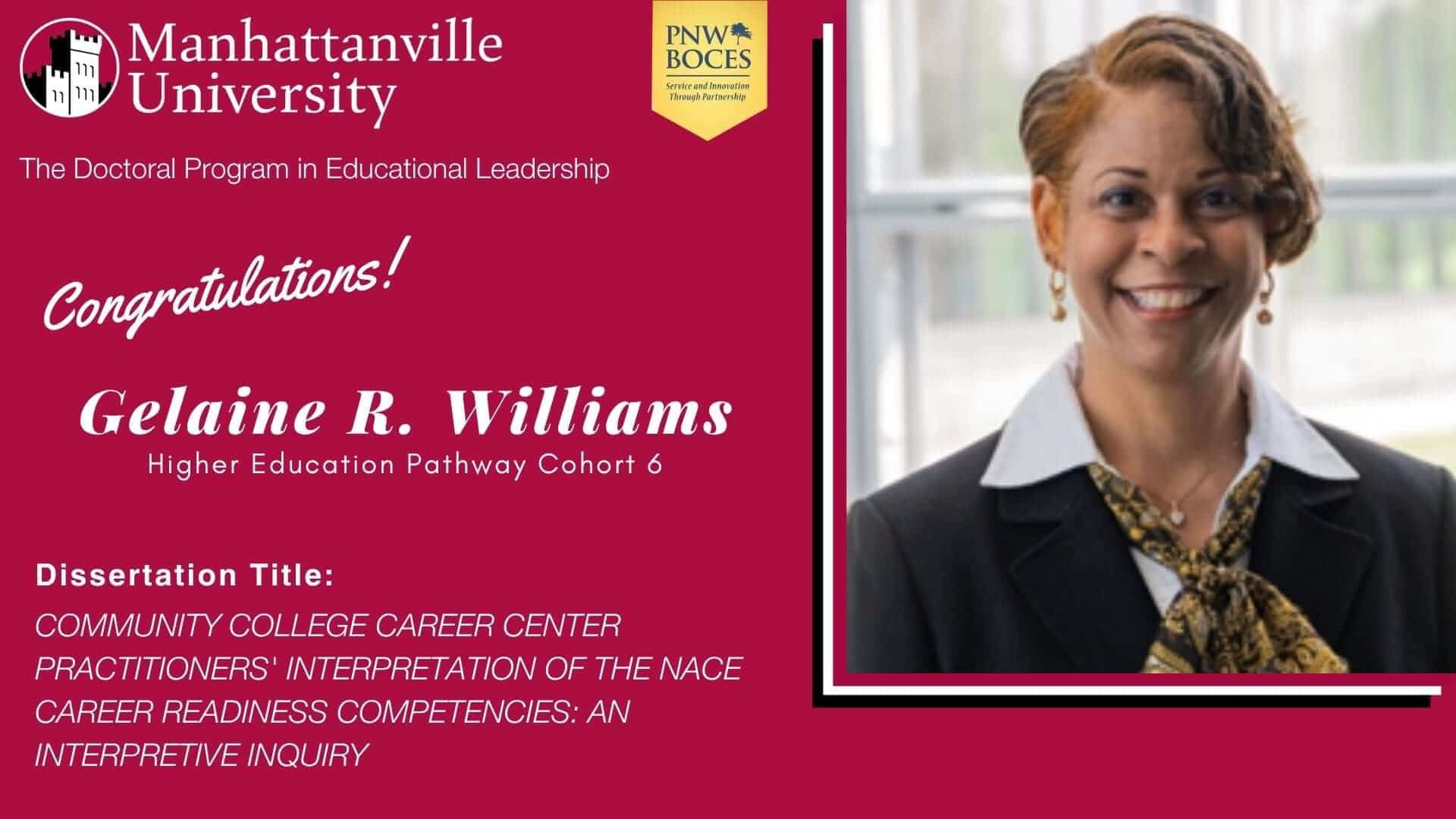
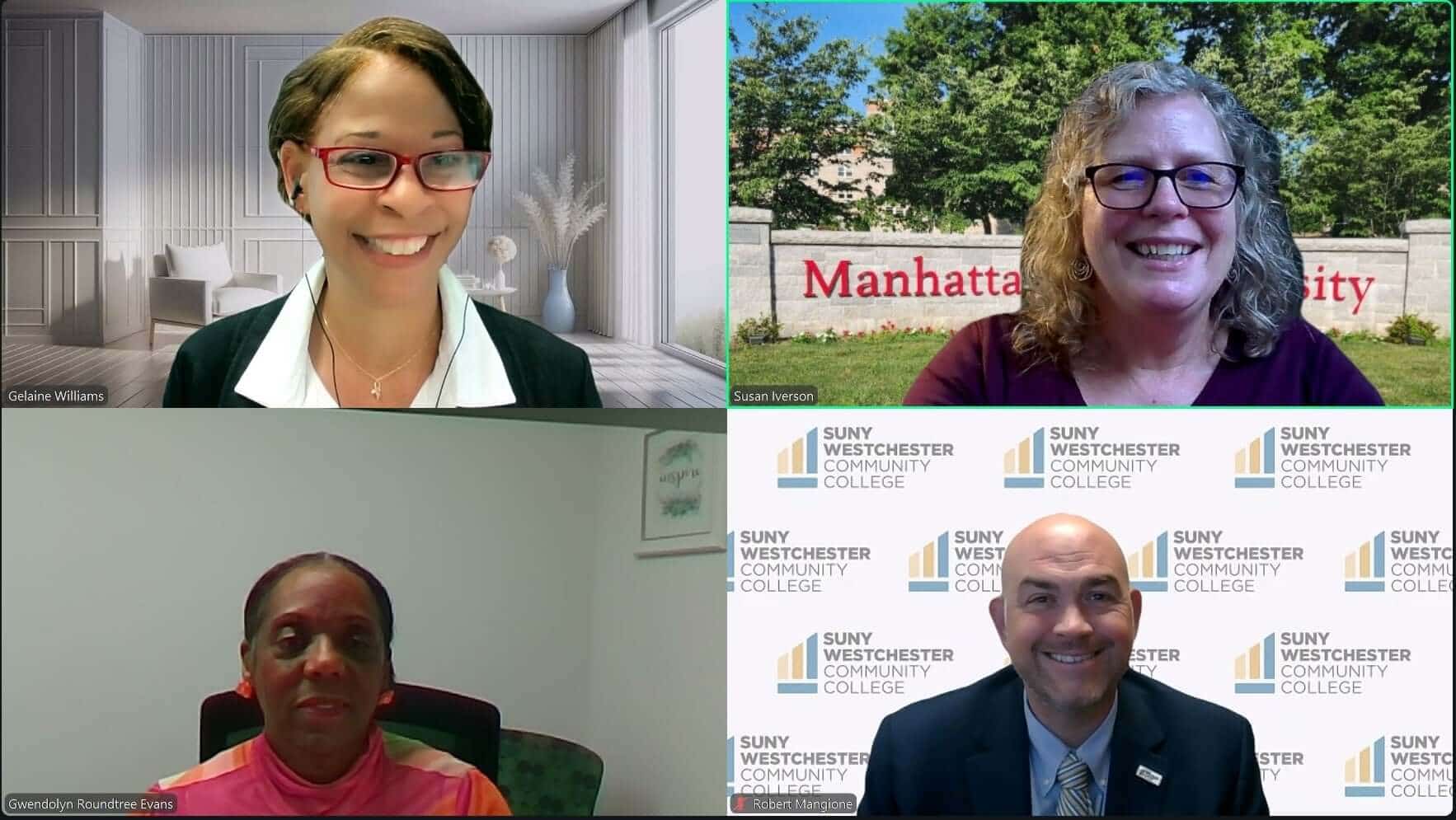
Congratulations to Gelaine R. Williams, who on Wednesday, July 29, 20226 successfully defended her dissertation.
The title of Gelaine's dissertation is, "COMMUNITY COLLEGE CAREER CENTER PRACTITIONERS' INTERPRETATION OF THE NACE CAREER READINESS COMPETENCIES: AN INTERPRETIVE INQUIRY."
The abstract of this study follows:
Overview of Problem: The public and political discourse regarding whether college graduates are career ready has heightened the accountability pressures for higher educational institutions. Scholars have investigated this career readiness phenomenon at four-year colleges with limited focus on the community college. Therefore, this study examined the career readiness dilemma from the perspective of community college career practitioners.
Research Purpose: The purpose of this study was to describe how career center practitioners at community colleges interpret the National Association of Colleges and Employers (NACE) Career Readiness Competencies for their student career preparation work.
Research Design: An interpretive qualitative study was utilized to explore perspectives of Career Center practitioners at community colleges using the theoretical lens of Kolb’s Experiential Learning Theory.
Sample: The research sample consisted of 12 career center practitioners from across the United States who had preferably served in their current leadership role as Director, Coordinator or Manager, Assistant/Associate Director, Assistant Coordinator or a related title for at least three years.
Data Collection and Analysis: Data was collected through semi-structured, one-on-one, 60-90 minute participant interviews. Analysis was done using Yin’s (2016) five-phased cycle of data analysis to guide examination of interview transcripts. The interviews explored career practitioners’ perspectives regarding the NACE Career Readiness Competencies Framework in design and delivery of student career readiness programming. Inquiries were also made about how practitioners translated and applied this concept to their work. This led to the emergence of four themes: 1) Resources Matter: “Funding Limits Us”, 2) Collaborations Matter: “Everybody is a Partner”, 3) Reflection Matters: “Reflect on What’s Happening”, and 4) Students Matter: “Invested in Serving Students”.
Findings/Results: This study found that Career Practitioners at community colleges facilitate career readiness work through collaborative efforts with faculty as the essential partners needed to embed competencies into curriculum, reflection is inevitable, and despite limited resources practitioners are invested in holistically serving students.
Conclusions/Implications: Future research should consider faculty perspectives, alumni perspectives, and multiple stakeholder perspectives including employers with critical support of community college leadership making career readiness an institutional priority through their strategic plan.
Dissertation Committee Chair:
Dr. Susan V. Iverson
Dissertation Committee Members:
Dr. Robert Mangione
Dr. Gwendolyn Roundtree Evans
Take Your Career to the Next Level
Elevate your leadership skills, deepen your understanding of critical and contemporary education issues, and learn to help solve the current challenges in P-20 education.
Learn to Inspire Change
The Doctoral Program in Educational Leadership from Manhattanville, offered in partnership with Putnam Northern Westchester BOCES, utilizes a forward-thinking approach to educational leadership that is ideal for practicing and aspiring leaders in any educational context. It is designed to support the goals of educational professionals who seek to develop their leadership skills for career advancement or current job enhancement.