Manhattanville is Reimagining the Liberal Arts for Today’s Students—and Tomorrow’s World.
For generations, a Manhattanville education has been defined by the liberal arts: a commitment to critical thinking, communication, ethical reasoning, and intellectual curiosity. Those values remain as vital as ever—yet the way they are delivered is evolving to meet a dramatically changing world.
Today’s students arrive at college with new pressures, new expectations, and new urgency. They are navigating rising costs, rapidly changing career landscapes, the use of AI in the classroom and the workplace, and a desire to tackle complex challenges head‑on. This doesn’t mean Manhattanville has stepped away from its liberal arts foundation. Instead, Manhattanville is finding new ways for those core principles to be taught, applied, and experienced.
A New Era of Liberal Arts
Over the last decade, student interest in majoring in humanities and liberal arts has declined. A data analysis conducted by the American Academy of Arts & Sciences’ Humanities Indicators project found “the number of bachelor’s degrees awarded by every field except the humanities increased through the end of the 2021 academic year.” Further, “...from 2012 to 2020, the annual number of humanities bachelor’s degrees awarded fell almost 16 percent, with some of the larger disciplines, such as history, losing almost one‑third of their majors.” As per the National Center for Education Statistics, in the 2010–11 school year, the humanities accounted for 16.8% of all bachelor’s degrees; that number dropped to 12.5% in the 2021–22 school year. According to a 2023 survey by the Gates Foundation, only 12% of high school students express a preference for a purely liberal arts education, while 60% favor more applied and career‑specific programs.
But just because today’s students aren’t majoring in humanities or liberal arts doesn’t mean they’re not studying them: they’re just doing it in a different way.
“We’re not changing who we are. We’re strengthening how we deliver our curriculum,” said Christine Dehne, Provost and Executive Vice President for Academic Affairs. “We are building on Manhattanville’s long tradition of interdisciplinary, student‑centered learning and commitment to the liberal arts.”
Liberal arts? Humanities? What’s the difference?
Think of the humanities as a subset of the liberal arts. Humanities focus on human culture, ideas, and expression. Examples include literature, history, philosophy, religion, art history, and foreign languages. Liberal arts is a much broader educational umbrella that encompasses humanities as well as sciences, social sciences, and fine arts.
The Evolution of the Liberal Arts
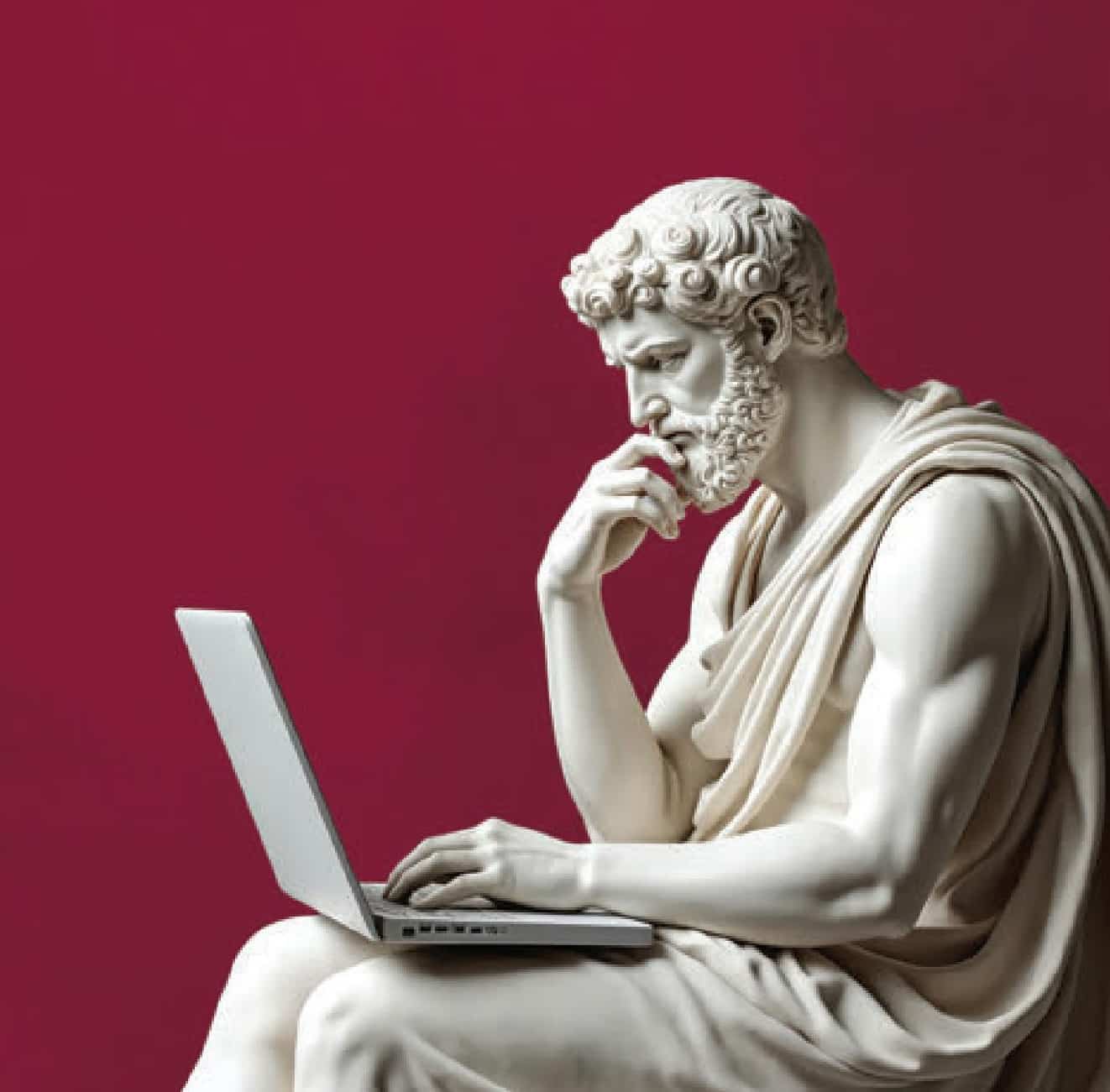
Today, the liberal arts are more of a mindset than a major. It’s an approach to learning that teaches students how to ask questions, connect ideas, and make sense of a complicated world. Whether they’re studying public health, environmental sustainability, or the arts, a liberal arts education builds the skills that matter everywhere: clear communication, critical thinking, and the ability to adapt. The liberal arts help us understand the human story.
The Evolution of Liberal Arts at Manhatanville
Even before the COVID‑19 pandemic, attitudes toward the liberal arts in higher education were changing, but the pandemic was an opportunity for many institutions—including Manhattanville—to pause and assess and refine their academic offerings. At Manhattanville, faculty across disciplines came together to identify what today’s students truly need to succeed—not just in their first job, but across a lifetime of change.
Now, Manhattanville is at the forefront of developing an interdisciplinary model that connects the enduring strengths of the liberal arts with the demands of the modern world.
In recent years, Manhattanville has introduced a set of innovative interdisciplinary programs. These programs are united by a shared core curriculum designed to cultivate essential liberal arts skills: storytelling, ethical reasoning, collaboration, and the ability to interpret and communicate complex information.
This approach reflects a simple but powerful idea: the most pressing challenges of our time cannot be solved through a single disciplinary lens. Issues like climate change, public health crises, and social inequality require adaptable thinkers who can draw connections across fields and evaluate competing perspectives.
“At Manhattanville, we believe deeply in the liberal arts,” said Dehne. While some liberal arts are not currently offered as majors, the essence of those studies remains embedded in new programs. “Students are learning things like how to deliberately tell stories connected to data and other information,” said Dehne. “They’re learning the importance of working with others and developing the skills of listening and reacting—all kinds of good interpersonal skills.”
Interdisciplinary Majors at Manhattanville
- Criminal and Social Justice (Fall 2024 debut)
- Global Justice and Human Rights (Fall 2024 debut)
- Environmental Justice & Global Sustainability (Spring 2025 debut)
- Public Health (Fall 2025 debut)
Skills That Matter More Than Ever
Through Manhattanville’s Interdisciplinary Studies Initiative, students develop their skills in critical thinking, collaboration, complex problem‑solving, and empathy across diverse perspectives. These experiences prepare students for success in their careers and their lives. By the time they graduate, all students will have earned a Creative Problem‑Solving Certificate. “These are competencies that have been identified by the World Economic Forum’s ‘Future of Jobs Report,’” said Dehne. “They’re truly skills for the next generation.”
Another defining feature of Manhattanville’s approach is its emphasis on experiential and project‑based learning.
Students are not only studying ideas—they are applying them. Through collaborative projects, interdisciplinary coursework, internships, study abroad programs, and real‑world problem‑solving, students practice working across perspectives and disciplines. In some cases, courses are co‑taught by faculty from different fields, modeling the kind of collaboration students will encounter in their careers. This hands‑on learning ensures that liberal arts skills are not just theoretical—they are practiced, refined, and lived.
While certain majors have evolved or been restructured, the intellectual foundations they represent remain deeply embedded across the curriculum.
Philosophy, history, art, and cultural analysis continue to shape students’ experiences—integrated into courses, informing discussions, and strengthening interdisciplinary work.
In fact, this integration often makes these disciplines more visible and impactful. Instead of being confined to a single major, their insights now influence a wider range of students and fields.
By building programs around a shared core, Manhattanville can adapt more quickly to student interests and emerging fields—adding new programs, refining existing ones, and ensuring that offerings remain relevant.
Incoming students are already responding. Many now enroll with these interdisciplinary majors in mind, signaling strong momentum for this evolving model. “This generation is very interested in trying to solve some of the big problems they see in the world. They don’t want a theoretical major that doesn’t seem applicable to things. They want to grapple with tough problems,” said Dehne.
Dehne added, “These interdisciplinary majors help students understand the different lenses that the disciplines involved in them provide—all the good stuff that we know comes out of the humanities and the liberal arts. It becomes clear that with these tough problems, you’re not going to solve them looking through one discipline. It takes working across the disciplines and taking elements from here and there and applying them together to get to some sort of solution.”
Interdisciplinary Studies Initiative (ISI) Core Classes
IDS 1001: Ways of Knowing
How do we come to know what we know? Ways of Knowing invites students to explore different ways humans seek understanding across the arts, sciences, and social sciences. Through an ever‑changing interdisciplinary theme, students learn to connect ideas, question assumptions, and approach complex problems from multiple perspectives—building the habits of mind that define lifelong learners and engaged thinkers.
IDS 1002: Thinking Well
What does it mean to think clearly in an age of information overload? Thinking Well teaches students how to question sources, interpret data, and recognize bias across everything from scholarly work to social media. Through hands‑on inquiry, students learn to evaluate evidence, draw meaningful conclusions, and consider the ethical dimensions of how information is used and shared.
IDS 1003: 21st Century Storytelling
Stories shape how we understand ourselves and the world around us. In 21st‑Century Storytelling, students explore how narrative takes form across media—from words and images to data and voice. Through projects that blend personal reflection and social awareness, they learn to craft compelling stories, identify audiences, and use storytelling as a tool for connection, persuasion, and change.
DES 2050: Designing for Change
How can creativity drive meaningful change? Designing for Change introduces students to design thinking as a collaborative, human‑centered approach to solving complex problems. Working on challenges from campus life and beyond, students learn to define issues, generate ideas, and prototype solutions—while cultivating empathy, imagination, and a sense of agency. The course invites students to see design not just as innovation, but as a practice of social responsibility.
Liberal Arts for Life
The liberal arts have always been about more than a specific major. They are about learning how to think, how to communicate, how to engage with others, and how to navigate a complex and uncertain world. That mission is as urgent today as ever.
“Just because we no longer have a French major, art history major, or philosophy major, it doesn’t mean that we aren’t infusing a lot of what students would learn from those types of classes into their existing majors,” Dehne said. “We might not have 16 philosophy classes on offer all the time, but we absolutely have philosophy classes that are still available, and we have classes that fold in philosophical approaches. Similarly, with art history, we still have our art history classes. We don’t have a major, but it is part of the curriculum.”
By reimagining how these skills are taught—through interdisciplinary study, experiential learning, and real‑world application—Manhattanville is preparing students not only for their first job, but for meaningful lives and evolving careers.
The result is not a departure from the liberal arts tradition.
It’s the next chapter.
The Liberal Arts Across Manhattanville’s Schools
Across Manhattanville’s three schools—the School of Arts & Sciences, the School of Education, and the School of Nursing & Health Sciences—the liberal arts are part of the curriculum.
Manhattanville’s School of Education prepares PreK‑12 teachers and administrators, higher education and community leaders, and educational industry entrepreneurs. Of course, the liberal arts are an essential part of preparing future educators.
“A liberal arts education prepares educators not simply to teach a subject or a grade level, but to understand others, think critically, communicate effectively, and lead with conviction,” said Brian Carolan, Dean of the School of Education. “Those skills have, and always will, be essential for educators, whether our graduates serve in classrooms, schools, nonprofit organizations, higher education, or leadership roles across the public and private sectors.”
The School of Arts & Sciences includes a wide array of majors and programs (including psychology, business management, sports studies, digital media production, and communications).
“The strength of a Manhattanville liberal arts education lies in its ability to empower students to ask meaningful questions, engage across differences, and pursue purposeful lives,” said Rebecca Lafleur, Dean of the School of Arts and Sciences.
“In the School of Arts and Sciences, this mission is grounded in a dynamic General Education curriculum that invites students to explore diverse fields, make connections across disciplines, and develop the intellectual flexibility needed to navigate a complex world. We are cultivating not only expertise, but curiosity, adaptability, and a deep commitment to the communities our graduates will serve.”
At the School of Nursing & Health Sciences, liberal arts play a key role in the education of future healthcare providers.
“The liberal arts are essential to undergraduate nursing because they develop the critical thinking, communication, ethical reasoning, and cultural awareness required for safe, patient‑centered care,” said Debra Simons, Dean of the School of Nursing & Health Sciences. “Courses in the humanities and social sciences help nursing students understand diverse human experiences, navigate complex moral decisions, and communicate effectively with patients, families, and interdisciplinary teams. This broad educational foundation strengthens clinical judgment, supports empathy and professionalism, and prepares nurses to address not only physical health needs but also the psychological, social, and cultural factors that influence health outcomes—key expectations in contemporary healthcare and accreditation standards.”
This article is from the 2026 edition of Manhattanville Magazine. To read the entire magazine, visit https://issuu.com/manhattanvillecollege/docs/manhattaville_magazine_fall_2026_