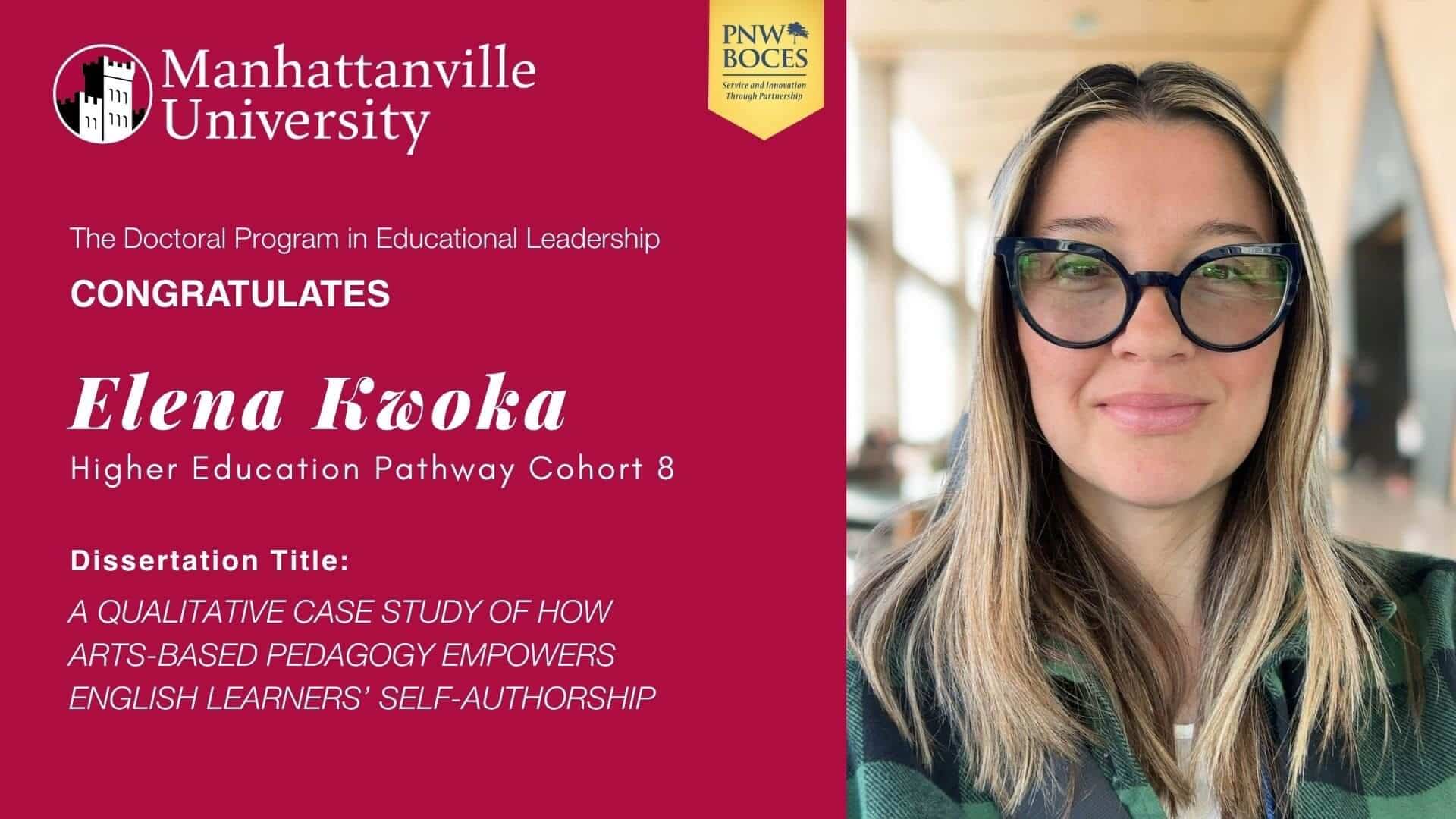
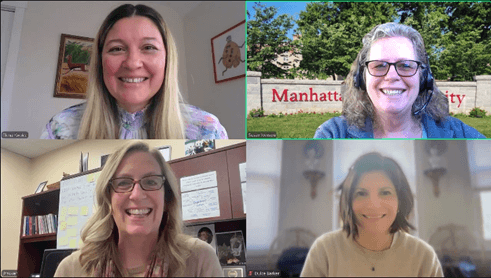
Congratulations to Elena Kwoka, who on Monday, April 6, 2026, successfully defended her dissertation.
The title of Elena’s dissertation is, "A QUALITATIVE CASE STUDY OF HOW ARTS-BASED PEDAGOGY EMPOWERS ENGLISH LEARNERS’ SELF-AUTHORSHIP."
Overview of Problem: English Learners (ELs) often face challenges expressing their identities and authoring their own stories within traditional academic settings. Standardized assessments and language-focused curricula can limit the opportunities that they have for creative expression, voice, and agency. There is a need to explore pedagogical approaches that integrate art and multimodal practices to support ELs in developing language skills while affirming their cultural and personal identities.
Research Purpose: The purpose of this qualitative case study is to document and describe how one summer arts-based program can support English Learners (ELs) in feeling more confident in their language, culture, and identity. Drawing upon Kegan’s (1994) theory of self-authorship and Maxine Greene’s (1995) aesthetic education framework, this study examines how imagination and creative expression contribute to a student’s identity development.
Research Design: This study employed a qualitative case study approach to explore how a summer arts-based program supports English Learners’ self-authorship, agency, and language development.
Sample: Data sources included one program instructor, one teaching artist, one program director, seven students, and artifacts produced by English Learners in an integrated summer program.
Data Collection and Analysis: Data were collected through observations, student artifacts, semi-structured interviews, and reflective field notes, to capture the experiences, creative expressions, and perspectives of participants in the summer arts-based program. Findings: Four themes emerged from analysis, each named using in vivo quotes from participants: (a) All My Emotions; (b) My Home is an Adventure; (c) Trabajamos Juntos: We Work Together; and (c) They Have Tried Their Hardest. The findings suggest that arts-integrated programming can be a powerful tool for supporting language development, agency, and identity formation among ELs.
Conclusions/Implications: This study demonstrated how arts-based experiences support English Learners’ (ELs’) self-authorship, agency, identity, and language confidence. Through visual art, poetry, and collaborative projects, students reflected on personal experiences, expressed cultural narratives, and exercised meaningful choice in a low-risk environment. Implications for practice include designing programs that center student voice, integrate multimodal practices, and leverage cultural knowledge to foster self-expression and learning. Future research should examine longitudinal impacts, diverse contexts, and the role of language proficiency in arts-based self-authorship.
DISSERTATION COMMITTEE CHAIR(S):
Dr. Susan V. Iverson
DISSERTATION COMMITTEE MEMBER(S):
Dr. Jennifer Hauver
Dr. Dulce Barker
Take Your Career to the Next Level
Elevate your leadership skills, deepen your understanding of critical and contemporary education issues, and learn to help solve the current challenges in P-20 education.
Learn to Inspire Change
The Doctoral Program in Educational Leadership from Manhattanville, offered in partnership with Putnam Northern Westchester BOCES, utilizes a forward-thinking approach to educational leadership that is ideal for practicing and aspiring leaders in any educational context. It is designed to support the goals of educational professionals who seek to develop their leadership skills for career advancement or current job enhancement.