This National Pollinator Month, peek inside the hives that power Manhattanville honey and hands-on learning
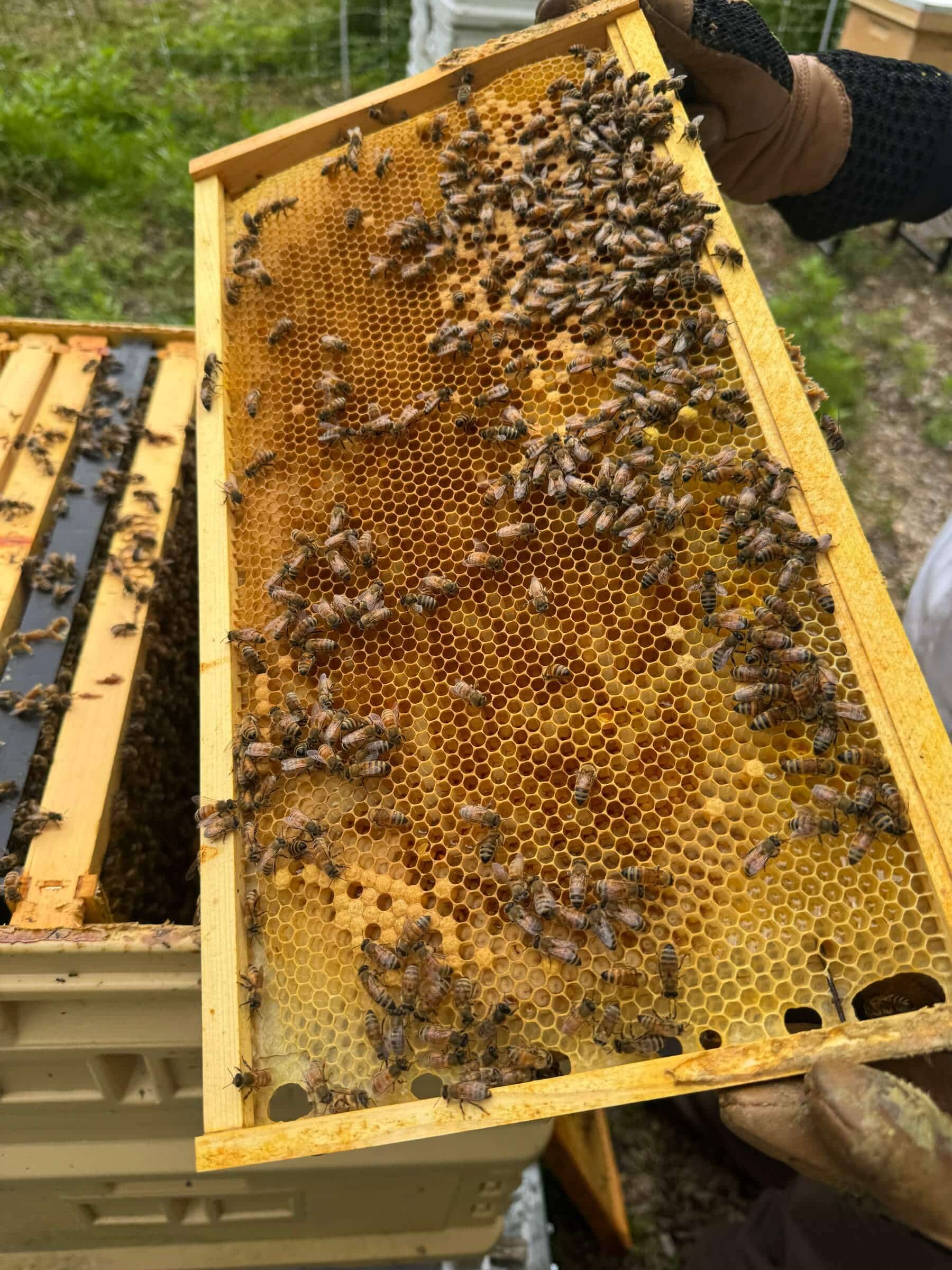
At Manhattanville University, learning doesn’t just happen in classrooms. Sometimes, it happens among thousands of bees. In a quiet area of the Manhattanville campus, all looks calm among the beehives. But inside the hives, the bees are always hard at work.
Anthony Herrmann, Director of Campus Safety, has been part of the Manhattanville community since 1998. He began beekeeping as a hobby about 15 years ago. A few years ago, he brought his beehives to campus, and helped turn the hives into a living, buzzing classroom. Now, he plays an integral role in looking after the bees and helping students learn from them.
Learning by Doing—With Bees
Students who take the course BIO.1017 (Ecology and Beekeeping) learn about basic ecological concepts such as food chains and food webs, biotic competition, the importance of biodiversity, environmental preservation, and movement of nutrients and matter through basic terrestrial and aquatic ecosystems. The importance of these concepts to understanding how ecosystems function is integral to the course. Students also talk about how ecosystems are being affected by human activities.
To give a real-life example of human interactions with the environment, students in the course learn the fundamentals of beekeeping, including live interactions with bee hives and honey production. The course is co-taught by Herrmann and Lucia Maestro-Martinez, Adjust Professor of Biology. The academic side of the program, Hermann insists, belongs largely to Maestro-Martinez. “She’s the professor,” Herrmann said. “I’m really more of a lab assistant.”
“Teaching students life skills that might eventually be useful for their professional career development or even spark an interest in a future hobby are also great ways to introduce curriculum through experiential learning,” said Maestro-Martinez.
After the honey is harvested from the beehives, students even help bottle the honey. They also take part in one of the class’s most creative traditions: designing the label.
“We run a label contest,” Herrmann explained. “Whichever group comes up with the best one—that’s the label for the year.” From harvesting to design to packaging, students are involved in every step of producing Manhattanville’s honey, blending science with creativity and entrepreneurship.
It’s a wonderful opportunity for students to see a natural product move from hive to finished bottle, all within the span of a class.
From Hive to Honey
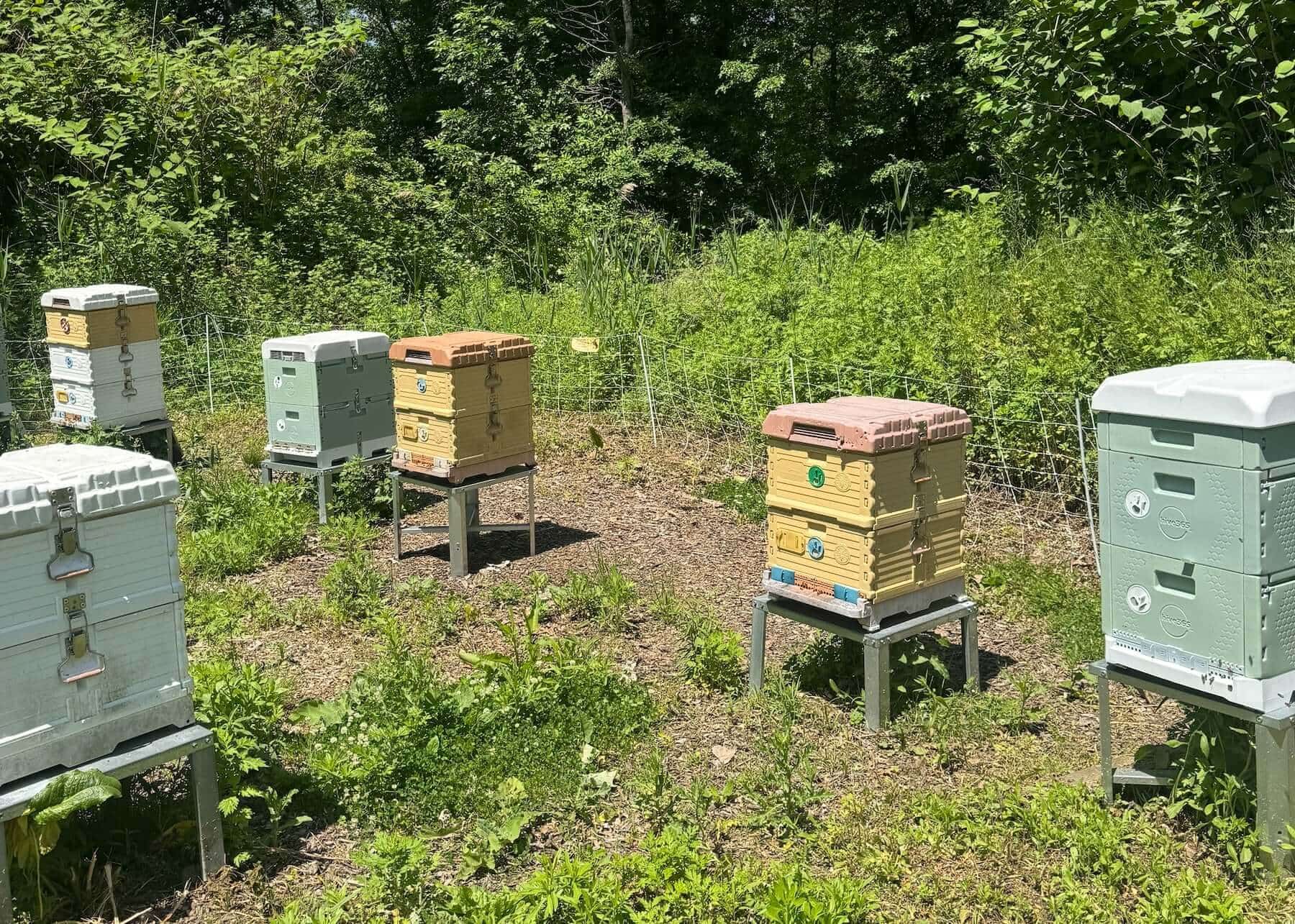
Although Herrmann describes beekeeping as “a hobby” for him, his current setup includes about eight hives, and in a good year, a single hive can produce anywhere from 60 to 100 pounds of honey. This season, Herrmann is aiming for a total yield of 300 to 400 pounds. However, as any beekeeper will explain, scaling isn’t instant.
“There’s at least a one-year lag,” he said. New hives take time to establish, and first-year colonies don’t produce as much honey. It’s what Herrmann affectionately calls “bee math”—a mix of planning and patience.
“There’s always one hive that’s a problem,” he laughed, recounting a recent late-night battle with sugar ants that had invaded one of his hives. “I was out at 10:30 p.m. dealing with it.”
Currently, much of the honey produced from the hives on campus is sold informally at local events. Conversations are underway about bringing more “Manhattanville Honey” to campus (and beyond) in the future.
A Moment of Calm
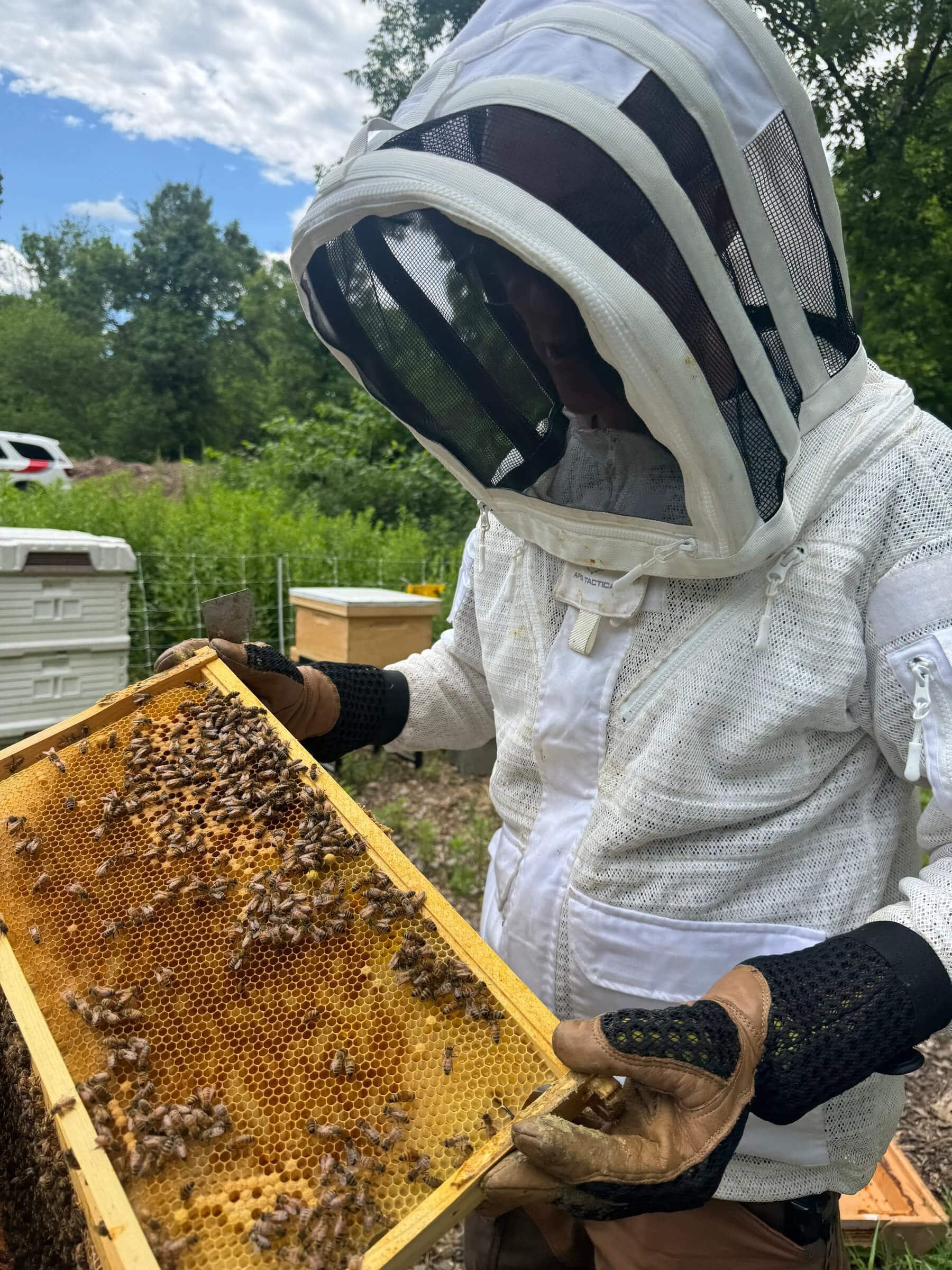
For those unfamiliar with beekeeping, the idea of standing among thousands of bees can sound intimidating. Herrmann understands that reaction—he felt it himself in the beginning of beekeeping. But there’s something about the steady, collective drone of the hive that creates a surprising sense of stillness—even as thousands of bees move around you.
“I don’t know what it says about my life,” Herrmann joked, “when thousands of stinging insects is my moment of calm.”
Why Bees Are Important
June is National Pollinator Month, a time to recognize the essential role bees and other pollinators play in ecosystems and agriculture. Bees are essential to the environment, and to humans (they pollinate one-third of the food we eat). When bees visit flowers in search of their food (nectar and pollen), they brush up against the flower’s reproductive parts and spread pollen from flower to flower. Many plants cannot reproduce without the pollen carried to them by pollinators. The fact that humans can collect some of the honey that bees produce is a sweet bonus.
At Manhattanville, there’s no better way to learn about the importance of pollinators like bees by visiting the beehives in person and seeing up close just how amazing bees are.