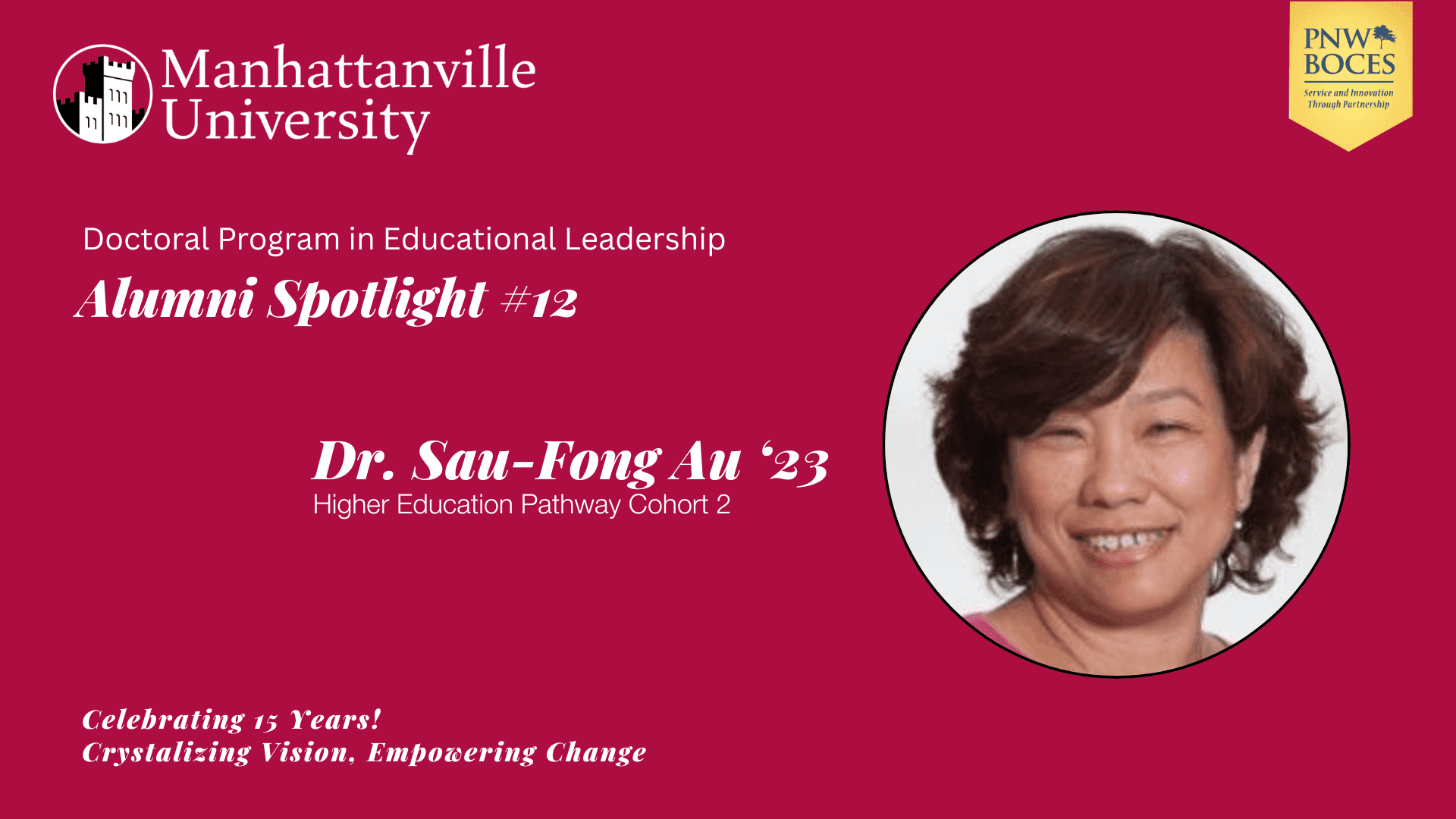
Dr. Sau-Fong Au (EdD ’23) exemplifies the mission and legacy of Manhattanville University’s Doctor of Education program—leadership grounded in compassion, community impact, and a commitment to equity.
Currently serving as the Director of the Women’s Center at Brooklyn College, Dr. Au has built a career focused on advocacy, identity development, and empowering women and students from diverse cultural and religious backgrounds.
For Dr. Au, the 15th Anniversary of the EdD program is both a personal milestone and a collective celebration. Personally, it reflects a journey she once never imagined taking: the completion of a doctoral degree while balancing professional leadership, service, and community engagement. Professionally, the anniversary represents the strength and evolution of a program that develops scholar-practitioners who lead with intentionality, empathy, and a drive to improve educational landscapes. She sees the milestone not just as recognition of the program’s longevity, but as affirmation of the community of thoughtful and principled leaders it continues to produce.
When asked to describe her experience, Dr. Au shared that the EdD program helped her become a critical, reflective practitioner—one deeply aware of how identity, voice, representation, and systems intersect in education. She recalled the supportive cohort model, rigorous dialogue with faculty, and the space to process both scholarship and lived experience as highlights of her Manhattanville journey. One of her most vivid memories is the sense of intellectual belonging she experienced in the program: a space where her perspective mattered and where she was encouraged to build research grounded in justice and compassion.
Dr. Au’s dissertation, An Intersectional Qualitative Inquiry: Experience and Identity of Uncovered Muslim Women, centered the voices of Muslim college women who defy common stereotypes, assumptions, and monolithic narratives. Drawing on intersectionality theory, religious identity theory, and qualitative inquiry, her study explored how uncovered Muslim women navigated visibility, belonging, and identity in the public sphere—particularly when their experiences did not align with dominant expectations of what a “Muslim woman” should look like.
Her research revealed the nuanced emotional, cultural, and social negotiations these women face: navigating others’ assumptions about their religiosity, choosing when to explain or withhold personal context, and seeking environments where their identity is understood without over-explanation. At the same time, Dr. Au illuminated the agency and resilience of her participants, who asserted their identities not through external markers but through personal conviction, belief, and lived expression. Her work challenges educators, policy makers, and community leaders to recognize how identity is interpreted, misread, or erased—and to create environments that honor multiplicity rather than rely on surface-level assumptions.
In her current role at Brooklyn College, Dr. Au brings these findings into practice every day. She leads programs at the Women’s Center that foster community, advocacy, personal development, and inclusive dialogue. Whether hosting workshops, mentoring student leaders, facilitating identity-oriented programming, or providing advocacy and support, she remains committed to ensuring that students are seen, respected, and affirmed as whole individuals, not as stereotypes or representatives of a single narrative.
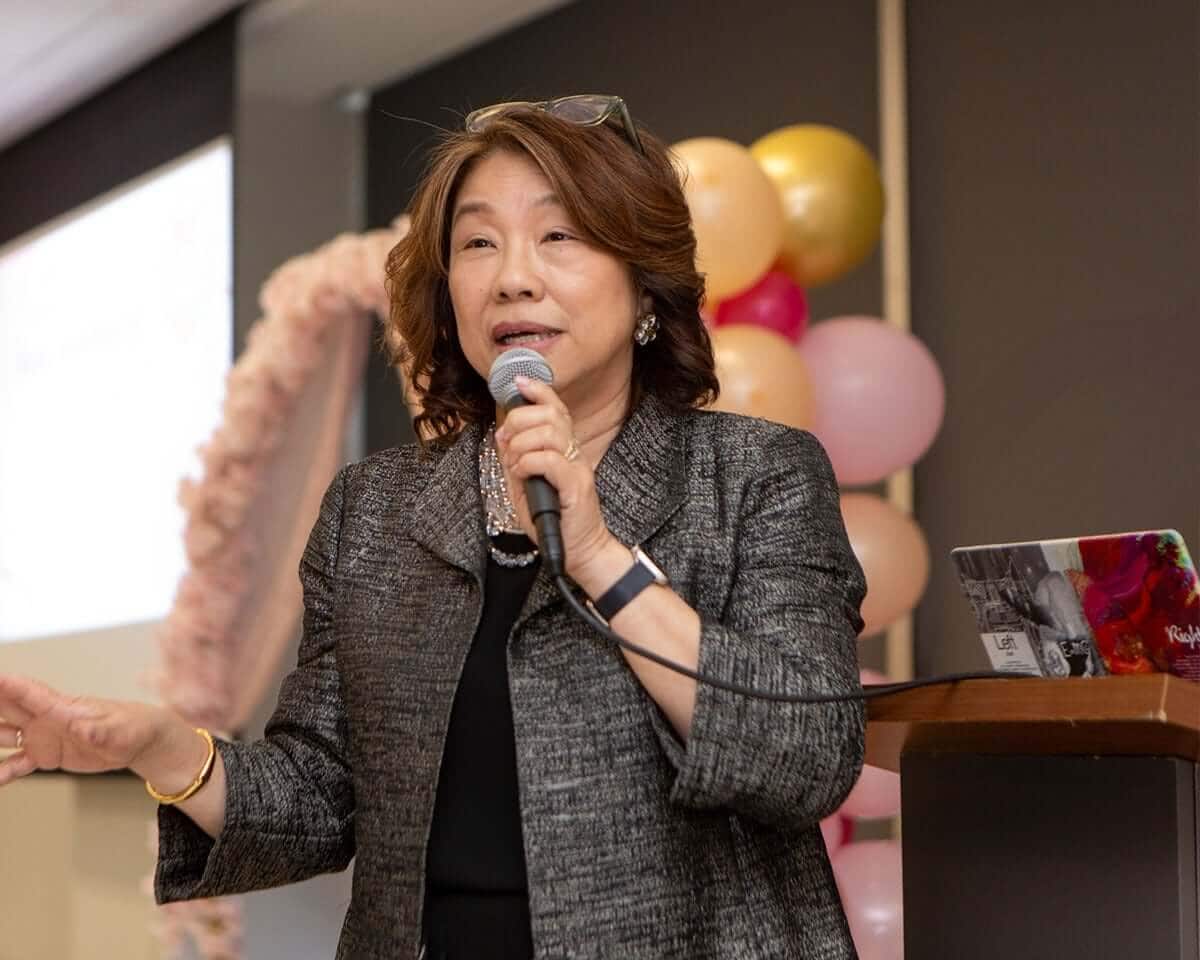
Her leadership emphasizes the belief that educational spaces must not only meet academic needs, but also serve as sites of belonging—places where students can explore identity safely, find support, and build the confidence necessary to reach their potential. Her work illustrates how intersectional research can move beyond theory to transform practice, program design, and student experience.
Looking ahead, Dr. Au hopes her scholarship will continue to amplify communities whose voices are often overlooked—not just Muslim women who do not fit public assumptions, but all individuals navigating the complexities of identity in environments shaped by bias and social expectation. She plans to continue developing programming, professional learning, and educational spaces that encourage open dialogue, authentic representation, and critical reflection.
As she reflects on the program’s legacy, Dr. Au describes Manhattanville as a place that cultivates leaders with heart—individuals who step into educational spaces determined not only to succeed, but to serve. She sees the EdD program as transformative in building leaders who are attentive to people, courageous in questioning systems, and committed to creating meaningful change.
In her words, the program prepares leaders who understand that research and representation matter—and that when we listen deeply, we lead better.
To learn more about the doctoral program, we invite you to attend an upcoming info session
Donations to the Doctoral Program EmpowerEdD Leadership Fund support our students and their research
The “EmpowerEdD Leadership Fund” Fund was established in 2015 to pay it forward to the Manhattanville University Doctoral Program. We thank you for your generosity and support of the Doctoral Program in Educational Leadership!
Take Your Career to the Next Level
Elevate your leadership skills, deepen your understanding of critical and contemporary education issues, and learn to help solve the current challenges in P-20 education.
Learn to Inspire Change
The Doctoral Program in Educational Leadership from Manhattanville, offered in partnership with Putnam Northern Westchester BOCES, utilizes a forward-thinking approach to educational leadership that is ideal for practicing and aspiring leaders in any educational context. It is designed to support the goals of educational professionals who seek to develop their leadership skills for career advancement or current job enhancement.